From Smoke to Repair

Parashat Devarim always arrives with unusual emotional weight. We stand at the threshold of Tisha B'Av, when we remember the destruction of the Beit Hamikdash and reflect on what it means to live in a world that is still waiting to be made whole.
Moshe Rabbeinu begins Sefer Devarim by speaking to the Jewish people before they enter Eretz Yisrael. He reviews their journey, their failures, their challenges, and their responsibilities. One of the painful words we hear is "Eicha," as Moshe asks, "How can I alone carry your burden, your trouble, and your strife?"1 The same word will echo on Tisha B'Av in Megillat Eichah: "How does the city sit alone?"
Chazal noticed this repetition in a well-known Midrash that observes that the word "Eichah" was spoken by three people, at three different moments in our history: Moshe here in Devarim, Yeshayahu in his rebuke of the nation, and Yirmiyahu in Megillat Eichah. The Midrash reads this as a progression rather than a coincidence. Moshe's Eichah is spoken while the people still stand at the edge of their mission, full of potential. Yeshayahu's Eichah is a warning, spoken as that potential begins to erode. Yirmiyahu's Eichah is mourning, spoken after the fall has already happened.5 Three voices, one unfinished story — a nation moving from promise, to warning, to loss.
Eicha, then, is not only a word of grief, it is a question:
How did we get here? How did a people with a mission become divided? How did a society meant to reflect holiness become burdened by conflict, mistrust, and disregard for one another?
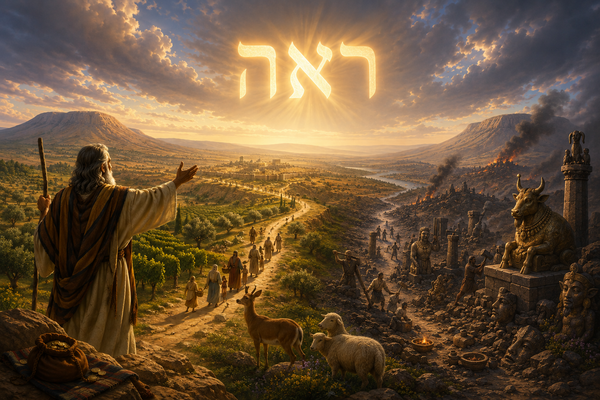
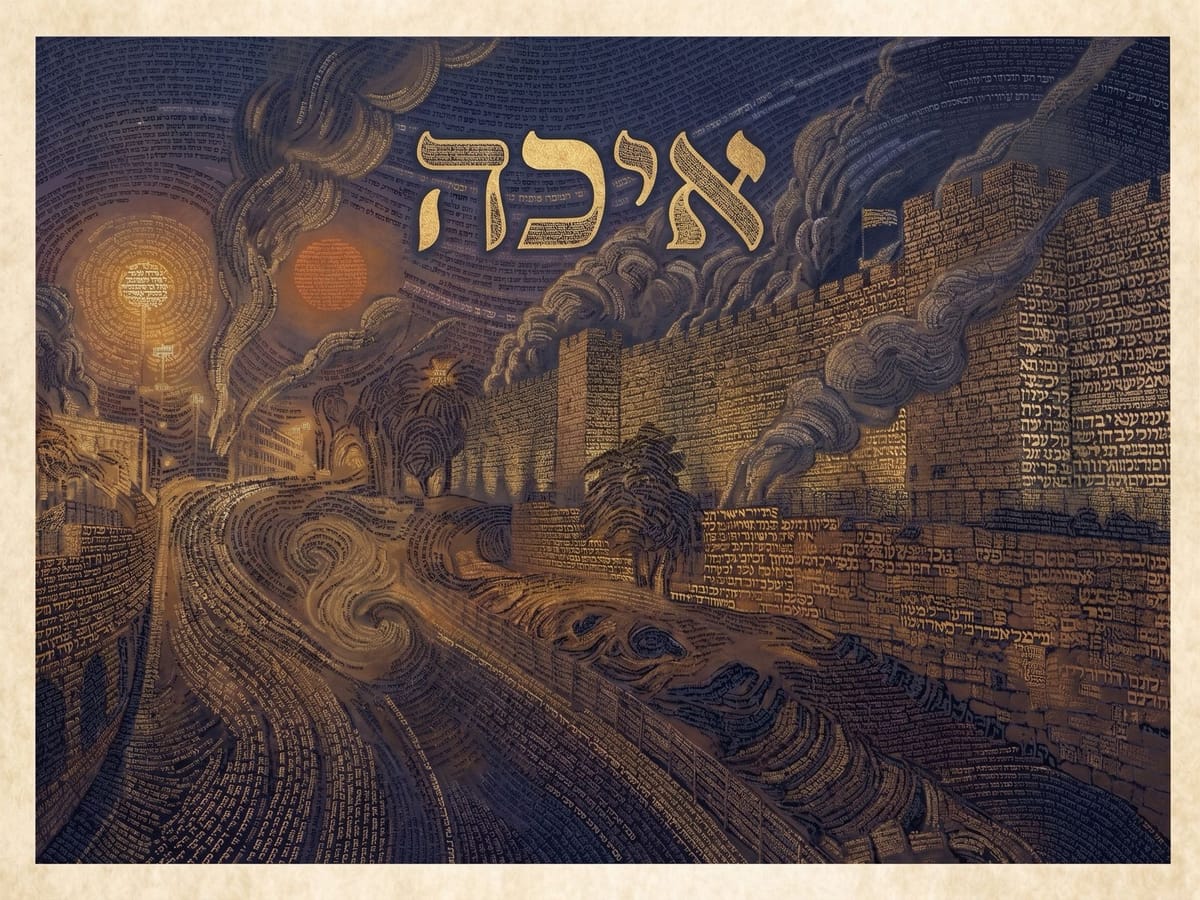
In recent days, many of us have looked outside and seen a haze of smoke from distant wildfires. The smoke can make the sky look unfamiliar. It can blur what is normally clear. Even when the fire is far away, its effects are felt close to home.
There is something deeply fitting about this image during the Nine Days. The destruction of the Beit Hamikdash was not merely an event in the distant past. Its smoke still reaches us today. The consequences of hatred, division, and spiritual neglect can travel far beyond the original source. A fire that begins in one place can affect an entire community.
Smoke also reminds us that we are connected. What happens in one place matters somewhere else. What we say, what we build, what we ignore, and how we treat others all have consequences.
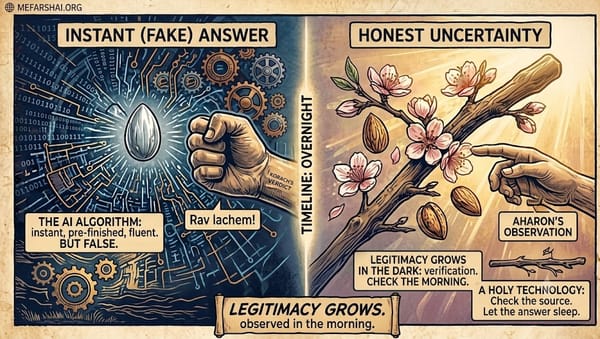
We are living through a time of extraordinary advancement. Artificial intelligence is becoming a catalyst for creativity, learning, communication, medical discovery, business growth, and problem-solving. It can help us process information, organize complexity, and create tools that improve people's lives. Used wisely, it can be a remarkable form of assistance.
Yet technology alone cannot answer the question of Eicha.
AI can help us move faster, but it cannot decide where we should go. It can help us communicate, but it cannot create empathy on our behalf. It can help us build, but it cannot tell us what is worthy of building. The power to advance must be joined with the responsibility to improve.
That is the challenge of these days. We are called not only to mourn what was destroyed, but to become people who build differently — to use every gift, whether ancient wisdom or modern technology, in service of greater understanding, kindness, dignity, and connection.
May the smoke in the air these days serve as a reminder rather than only a discomfort: that what we build and how we treat one another travels farther than we think. May we merit to clear away the smoke that obscures our vision, to answer the question of Eicha with honest reflection and meaningful action, and to help bring a world closer to redemption.
Shabbat Shalom.
Fred
Fred Goldman is Managing Partner at Gently Ventures, (including bavl.pro + Jerrypress.com), father to eight awesome kids, and a serious Sefarim geek.